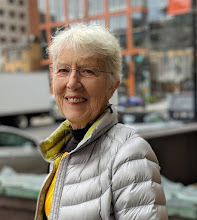
Here are the opening stanzas of a thoughtful poem by mathematician-writer Marian Christie:
Wednesday, July 8, 2026
Counting , , ,
Friday, July 3, 2026
Short word problems: do the math
Raymond Nat Turner is the poet-in-residence for Black Agenda Report (a website of news, commentary, and analysis from the black left) -- and I have found and been moved by his mathy poem of protest entitled "Short word problems: do the math" l I offer its opening stanzas below, followed by a link to the complete poem.
Monday, June 29, 2026
YouTube Video Celebrates Omar Khayyam
Enjoy a 1-minute video celebrating
the MATH and POETRY of Omar Khayyam
Monday, June 22, 2026
Cross BRIDGES ... 2026 Bridges Galway Conference
Each year an international BRIDGES Conference celebrates the connections between mathematics and the arts -- featuring connections with music, literature, visual art, theater . . . Here is a link to the website for the 2026 BRIDGES Conference -- to be held August 5-8 in Galway, Ireland.
An important and popular part of each BRIDGES Conference is a Poetry Reading. Scheduled for Saturday, August 8, 2026, the formal reading will include mathy poems from each of the poets named below; on this webpage (maintained by poetry reading co-organizer--and poet--Sarah Glaz) each of the following names is linked to biographical information and a sample poem.
Tuesday, June 16, 2026
Sadness -- Math-Poet Emily Grosholz has passed . . .
I have been saddened to learn of the death, early in May, of philosopher, writer, and professor at Penn State University -- and a frequent contributor to this blog -- Emily Rolfe Grosholz. (Here is a link to her informative obituary.)
In remembrance of Emiy, here is the opening stanza of her poem ""In Praise of Fractals" -- posted in this blog at this link back in November, 2014.
| from "In Praise of Fractals" by Emily Grosholz |
Thursday, June 11, 2026
Let's Play Math -- and double Pi!
A website that I enjoy visiting and one that many current math teachers could enjoy visiting often is
Denise Gaskins' Let's Play Math – Helping families to learn and enjoy math together.
Learn more about Gaskins here in this biographical sketch -- and enjoy her Let's Play Math blog. Here is a link to a posting with several mathy poems: Math Makers: Write a Poem – Denise Gaskins' Let's Play Math. Here is one of my favorite examples of her postings:
Thursday, June 4, 2026
Celebrate Juneteenth!
This month, America celebrates its Juneteenth, commemorating the day the last group of enslaved African Americans was informed they were free. Juneteenth marks the events of June 19, 1865, in Galveston, Texas when the last Black slaves of the Confederacy were ordered free following the arrival of Union troops. Also called Emancipation Day or Freedom Day, the holiday rose to national prominence in 2020 amid nationwide protests against ongoing racial inequities, sparked in part by the police killings of George Floyd, a Black man, and Breonna Taylor, a Black woman. Juneteenth has been long celebrated by the Black community but was officially recognized as a federal holiday by President Joe Biden in 2021.
When is Juneteenth? Juneteenth is on Friday, June 19, this year.
Wednesday, May 27, 2026
Science in Meter and Verse (from Sci. Amer.)
Combining math and parenting . ..
It delights me that Scientific American includes science-related poetry -- and when my monthly issue arrives I turn first to the monthly poem. Here are the opening stanzas of 'The Algorithm' by California poet Barbara Quick from the May, 2022 issue.
Optimization under uncertainty
is a field of study in which my grown son
will earn his Ph.D. The math, in his case,
concerns the production of wind energy.He reads his papers aloud on the phone to me
as a way to optimize their clarity,
so that even a layperson, such as myself,
can understand what he’s saying,
in between each beautifully made
equation and graph.
. . . Quick's complete poem is available at this link.
Friday, May 22, 2026
Small Child, Loud Noise
Sent to me by poet Jacqueline Lapidus, I have this slightly mathy poem:
The Screaming Toddler Ratio
The volume of the voice is in inverse proportion to the size of the speaker/screamer. When I hear that screech in a store, I follow it to the stroller, squat down to eye level in spite of knee, and whisper, "Are you the very small person who's making that GREAT BIG NOISE?" Invariably, the kid stops screaming and looks at me with an expression that says, how the hell did she know?" I smile at the toddler, the toddler smiles back. I stand up and explain basic math to the grateful parent. Short people know! (I'm 2" shorter than when we first connected, of course.) Teachers, too.
Previous mentions of work by Lapidus in this blog may be found at this link.
Sunday, May 17, 2026
The last -- for which the first was made . . .
Monday, May 11, 2026
A Pleasure or a Puzzle?
A few weeks ago (during National Poetry Month) I came upon an opinion piece by Danny Heitman in the The Washington POST with this title: "I read poetry for work. You get to read it for pleasure." And today I am thinking about duality of roles for mathematics activity as well as for poetry -- a pleasure or a puzzle?? I celebrate both.
Danny Heitman is the editor of Phi Kappa Phi’s Forum magazine and the author of “A Summer of Birds: John James Audubon at Oakley House.” Heitman explains: As the editor of a magazine that includes a poetry column, I routinely read poems because I have to. But I also delve into poems for pleasure, something that makes me an outlier among America’s readers. According to a National Endowment for the Arts survey conducted in 2022, only 11.5 percent of American adults had read or listened to poetry in the previous year. When friends and I talk about what’s on our reading
And below, from the Spring, 2009 issue of Phi Kappa Phi Forum is a mathy poem by Robert Lima (1935-2022), for many years a Professor at Penn State University.
Sunday, May 3, 2026
Resisting Disability with Poetry and Math
We different humans have different abilities . . .
Zoeglossia is a literary organization seeking to pioneer a new, inclusive space for poets with disabilities. Launched in 2017, Zoeglossia is the first such organization in the poetry landscape. The idea is to provide an intersectional community open to a wide range of disability poetics, encouraging conversation and support. This link leads to a wide variety of poems that explore the experiences and consequences of illnesses and disabilities . .. and I offer a the opening portion of a sample from that collection below.
Number Twenty by Jonathan Mack
This, the story that brings me to you, is one story in twenty. In the other nineteen I am dead. In five stories I’m dead of AIDS, having suffered every possible infection and died at home, in a variety of hospitals, and in the toilet of a theater. There are seven suicides between the ages of twelve and twenty-five. There are two terrible car accidents -- one involving a drunk driver and one that is entirely my fault. In one story I live only three days and . . .
Jonathan Mack's poem is from This New Breed. Copyright © 2002 by Jonathan Mack.
Monday, April 27, 2026
Put a Fibonacci poem in your pocket!
Each year the month of April is celebrated as National Poetry Month -- and upcoming April 29, 2026 is this year's Poem in Your Pocket Day.
I invite you to explore this blog to find a poem you'd love to carry in your pocket . . . .and, below, I provide another possible pocket-poem -- this one a poem whose line-syllables are counted by the Fibonacci numbers. These lines below are the opening lines of a poem by Arizona State professor and writer Punya Mishra; the complete poem is offered at this link:
This link leads to previous blog postings that offer Fibonacci poems.
Thursday, April 23, 2026
Waiting for good and kind . . .
Only a bit of math ... but an important concern ... needing a solution:
Thursday, April 16, 2026
2026 AMS Math-Poetry Contest Winners
Today I have discovered the wonderful list of winning poems from this years Math-Poetry Contest sponsored by the American Mathematical Society. This link to the AMS website offers links to thirteen winning poems , ,, , I encourage you to follow the link and enjoy . . . and encourage students you know to explore math-poetry connections.
Below I offer the opening stanzas of a very fine poem by one of the AMS winners -- Jaycee Chen from the STEAM Academy at John F. Kennedy School. Chen's poem received an Honorable Mention in the Middle School Division.
A Quiet Music of Numbers by Jaycee Chen
Monday, April 13, 2026
April -- Celebrate BOTH Mathematics and Poetry
April is National Poetry Month AND National Mathematics and Statistics Awareness Month -- and here in this blog we continue to celebrate poetry-math connections. Below I offer the opening stanzas of an old poem of mine entitled "Time".
The clock goes round --
making time a circle
rather than a line.
Each year's return to spring
layers time on time.
Wednesday, April 8, 2026
A Poetic Triangle of Numbers
The shape and patterns of the following lines have me thinking of them as a visual poem:
1 x 1 = 1
11 x 11 = 121
111 x 111 = 12321
1111 x 1111 = 1234321
11111 x 11111 = 123454321
111111 x 111111 = 12345654321
1111111 x 1111111 = 1234567654321
11111111 x 11111111 = 123456787654321
111111111 x 111111111 = 12345678987654321
Friday, April 3, 2026
Scientific American Shares Rhymes
Lots of years ago, an important part of my awareness of poems that involve math came from reading work by Martin Gardner in his "Mathematical Games" in Scientific American . . . and it has been a delight to me to find poetry again in my issues of that magazine. METER, a Scientific American feature edited by Dava Sobel, offers a bit of science-related poetry each month -- and the April 2026 issue features three mathy limericks by Jeffrey Branzburg (a retired math teacher and technology consultant). I offer one of these limericks below.
Topology by Jeffrey Branzburg
Monday, March 30, 2026
Mathematics . . . is loaded with poetry
Online I have learned about a recent lecture by Werner Herzog at Brooklyn Public Library's Pi-Day celebration: Is Math Art? Werner Herzog Says Yes.
Quoting from Herzog's presentation:
"Beyond all of this, I do believe mathematics is a new form of art. . . It is loaded with meaning. It's not just an aesthetic or a form of abstract painting. It's loaded with poetry."
Monday, March 23, 2026
Celebrate the "Year of Math"
A Congressional Resolution declaring 2026 as a Year of Math in the U.S. was introduced in the Senate (on 12/18/2025) by its co-sponsors, Senators Shelley Moore Capito (R,WV) and John Hickenlooper (D, CO), and in the House (on 3/92/2026) by its co-sponsors, Representatives Chrissy Houlahan (D, PA-6) and Jay Obernolte (R, CA-23). We deeply appreciate that this is a bipartisan effort in both chambers.
Each of the Senate and the House resolved that it:
(1) expresses support for the declaration of a “Year of Math” in the United States;
Monday, March 16, 2026
A Syllable-square for St. Patrick's Day
March brings shamrocks --
luck of Irish,
let's dance and sway.
These words about the day we celebrate on March 17 are from Catherine Pulsifer, A Holiday Awaits -- one of many examples of Words of Wisdom found here. Details about the life of St. Patrick may be found here.
Saturday, March 14, 2026
Monday, March 9, 2026
Top Math Blogs on FeedSpot
Recently I as delighted to learn -- from Anuj Agarwal, the founder of FeedSpot -- that this blog Intersections -- Poetry with Mathematics has been selected as one of the Top 90 Math Blogs on the web (2026 Edition). And I have mentioned two others of the top 90 in my blog postings (found here).
Here is a link to the FeedSpot listings.
Another FeedSpot list to consider -- 30 best Math Teacher Blogs.
Thursday, March 5, 2026
Is 13 Unlucky?
Today I am briefly reflecting on the fact that both last month and this month (2026 February and March) contain a Friday-the-13th. And those thoughts have led me to a tiny, syllable-count triangle poem.
Is
it true
that Friday
the thirteenth's an
unlucky happening?
Counting syllables
can celebrate
( in a way )
that prime
day!
Friday, February 27, 2026
Spelling with Roman Numerals
Sharing a few words (found on X Twitter) from a FB post by poet Brian Bilston:
Previous postings in this blog of poems by Brian Bilston may be found at this link.
Saturday, February 21, 2026
Creative Writing -- Including Mathematics
A reminder of upcoming student mathy writing-contest deadlines:
Create a video for a STEAM poem (A list of poems is provided.) -- deadline April 30, 2026, more info here.
A MoMath Contest with a variety of entry categories, including poems -- deadline, April 23, 2026.
Contests for which entry deadlines have passed -- but which will offer new entry opportunities in the future -- include the AWM Essay Contest and the American Mathematical Society Poetry Contest.
And, starting to count by twos, I find:
Writing
is a process
to discover new thoughts.
Saturday, February 14, 2026
Valentine Math Poem
This morning as I was looking online for Valentine greetings to send to my grandchildren, I found this mathy poem:
Friday, February 6, 2026
Vector Poetry
In Rochallyi's article -- entitled "Vector Poetry" -- he shows us three different illustrations of poetry portrayed using vectors. He takes a phrase that he would like to communicate poetically and offers three examples of how it could be portrayed using vector poetry. The phrase is:
Monday, February 2, 2026
The Groundhog's Prediction
Growing up in western Pennsylvania -- on a farm close to Indiana, PA -- I was not far from the town of Punxsutawney and enjoyed celebration each year on February 2 of "Groundhog Day." On this day a legendary groundhog who has burrowed underground to spend the worst of winter -- near Punxsutawney, PA -- peeks out to test the weather. If he sees no shadow, spring is on the way BUT if he sees his shadow, he quicky scurries back to his underground refuge, this departure predicting six more weeks of winter. (Recent publicizing of this event has altered it -- now the groundhog does his shadow-seeing and prediction in front of a large audience. And it is televised!)
Today, in her weekly radio broadcast on wpsu, poet Marjorie Maddox offered the slightly mathy Groundhog Day poem "On Gobbler's Knob" by Pittsburgh poet Shirley Stevens (1940-2022). I offer it below (followed by a link to background information about the poem and the poet). Alas, today's groundhog has predicted six more winter weeks.
On Gobbler’s Knob by Shirley Stevens
We gather on the hill outside Punxsutawney
to draw tight circles against the dark.
Five thousand strong, we twist and shout
to circulate blood to our frozen toes,
Tuesday, January 27, 2026
Beauty in Mathematics
A few days ago I found poetic words (offered below) by G. H. Hardy (1877-1947) posted on X by @TheMathFlow -- I enjoyed not only the poem but also an exploration of various MathFlow postings -- which offer lots of delightful bits of mathematics. (Visit @TheMathFlow and enjoy!)
Thursday, January 22, 2026
Reading Numbers Like Poetry
When I come across a title that connects math and poetry, I become interested -- and want to read more. Google helped me discover here, in China Daily, an article featuring German professor Andrea Breard entitled "Reading numbers like poetry: A journey into ancient Chinese math." She goes on to tell about some algebraic methods that were written as poems -- the rhythm allowing easier and better memorization.
Andrea Breard is a German historian of mathematics, specializing in Chinese mathematics. Her remarks took me back to my childhood when we frequently repeated "counting rhymes" as we dressed or played or whatever. "One, Two, Buckle my shoe . . ." and "Hickory, Dickory, Dock . . . the mouse ran up the clock . . ." were frequent parts of my childhood chatter.
Friday, January 16, 2026
Share the Love of Math -- Students -- Enter Contest!
A Contest for High School Students -- Read on to learn more . . .
Students who are 15 to 18 years old (on September 1, 2025) are invited to apply for the 2026 Steven H. Strogatz Prize for Math Communication (sponsored by MoMath, the NY Museum of Mathematics) to share their love of math with the world!
On or before April 23, 2026 projects will be accepted in the following categories:
Art, Audio, Performance, Social media, Video, and Writing.
Examples include: podcasts, articles, school newspaper columns, art exhibits, videos, websites, Instagram accounts, songs, plays, and any other mode of public communication. Detailed information is available at this link.
Saturday, January 10, 2026
Celebrate Math-Women -- AWM Essay Contest
Entry deadline is coming soon -- February 1, 2026.
Students are invited to interview a math-woman
and write about it --
and submit the essay to the Association for Women in Mathematics
by February 1, 2026.
Guidelines (middle-school, high school, college submissions) are here.
Previous winning essays are available here (follow the link and scroll down).
Thursday, January 8, 2026
Math, Poetry, and AI
Recently I came across a math-poetry article here in a newsletter published by the University of Illinois, Springfield -- an article entitled "Navigating the Intersection of Math, Poetry, and AI: The Crossroads in Helena Soares’ Pursuit." The article shares poetry by Soares -- who is a student majoring in both mathematics and English -- and also includes a brief essay by her, entitled "A journey through math, AI, and poetry." Here is a poem by Soares from that article:
Saturday, January 3, 2026
Holding Logic and Imagination Together
Recently Google led me to a recent and fascinating article about Jordanian poet Dr. Zaina Al-Qasem, a Jordanian scholar, who combines data science with creativity and is also a published poet. For her, mathematics and poetry share thought patterns — both driven by interpretation, structure, and the search for meaning, but through different lenses.
Here are a few reflective lines of Zaina Al-Qasem's verse -- found in the article linked-to above -- lines that capture both introspection and intent.